Ranking-based sports
Manage races, weight classes, times, scores and performance-based standings. Ideal for competitions where the final result is not necessarily determined through head-to-head matches.
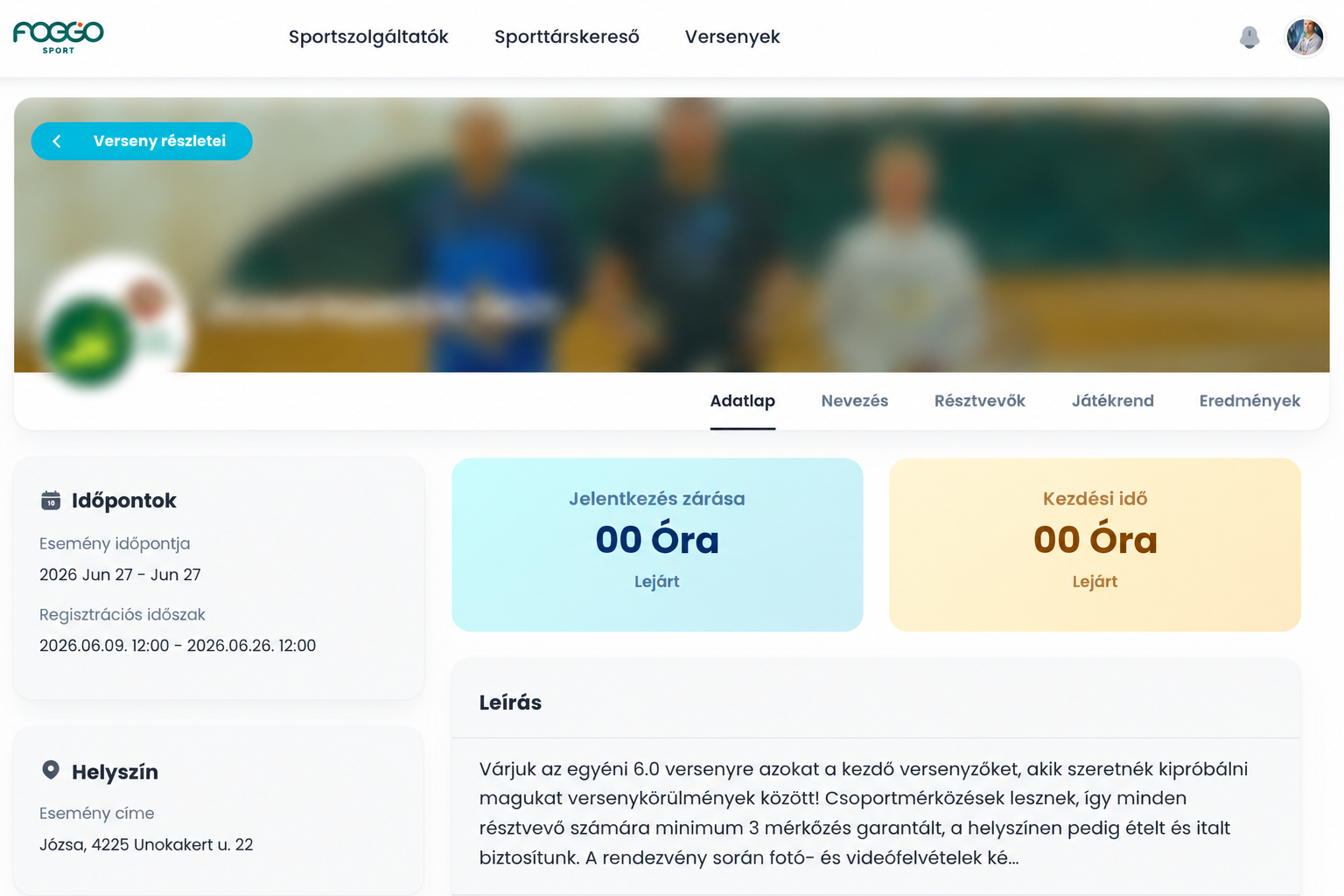
FoggoSport takes the administrative burden out of club tournaments, weekend cups, leagues, ranking-based events and match-based competitions. Whether you are organising a small event for a handful of participants or a competition day with 500–600 athletes, the module is built for the job.
No separate spreadsheets, emails, phone calls, Messenger threads or manual point calculations: one entry link, one admin interface and one traceable process from the first entry to the final results and ranking points.
For many organisers, entries, categories, draws, results, payments and point calculations live in separate files or communication channels. That may work for a few entrants, but it quickly becomes unmanageable when multiple sports, categories, teams, rounds, races or rankings are involved.
The tournament organiser is not limited to a single sport. It is designed for events that need to collect entries, manage categories, record results, inform participants and publish a clear results list or ranking.
Manage races, weight classes, times, scores and performance-based standings. Ideal for competitions where the final result is not necessarily determined through head-to-head matches.
Manage group stages, brackets, rounds, teams, singles entries and doubles entries. The system supports group formats, knockout formats and combinations of the two.
The module lets organisers manage the entire tournament workflow rather than a collection of disconnected tasks: online entries, payments, draws, competition management, changes, result entry and rankings.
Manage singles, doubles, team, age-group, weight-class, level-based and open categories. The system is not based on one sport-specific template and supports multiple competition structures.
Participants and teams can enter through one link, select a category and provide the required information. No scattered emails, phone lists or Messenger chaos.
Online payment and invoicing can be connected to the entry process, so the organiser does not need a separate spreadsheet to track who has paid, who is awaiting confirmation and which entries are active.
Manage group stages, brackets, qualification, rounds and knockout stages while keeping administration connected to the actual competition workflow.
For running, weightlifting, cycling, athletics and other performance-based sports, the objective is not always a draw or bracket, but the management of results lists, rankings, points or times.
For tennis, football, padel, badminton, combat sports, handball, volleyball and other match-based sports, the system manages matches, opponents, rounds and results.
If someone withdraws or another participant replaces them, the change does not disrupt the entire administration. The organiser can make adjustments while keeping the tournament status traceable.
Results do not have to be entered solely by the organiser. In leagues or longer championships, team captains or players can also submit results, significantly reducing the administrative burden.
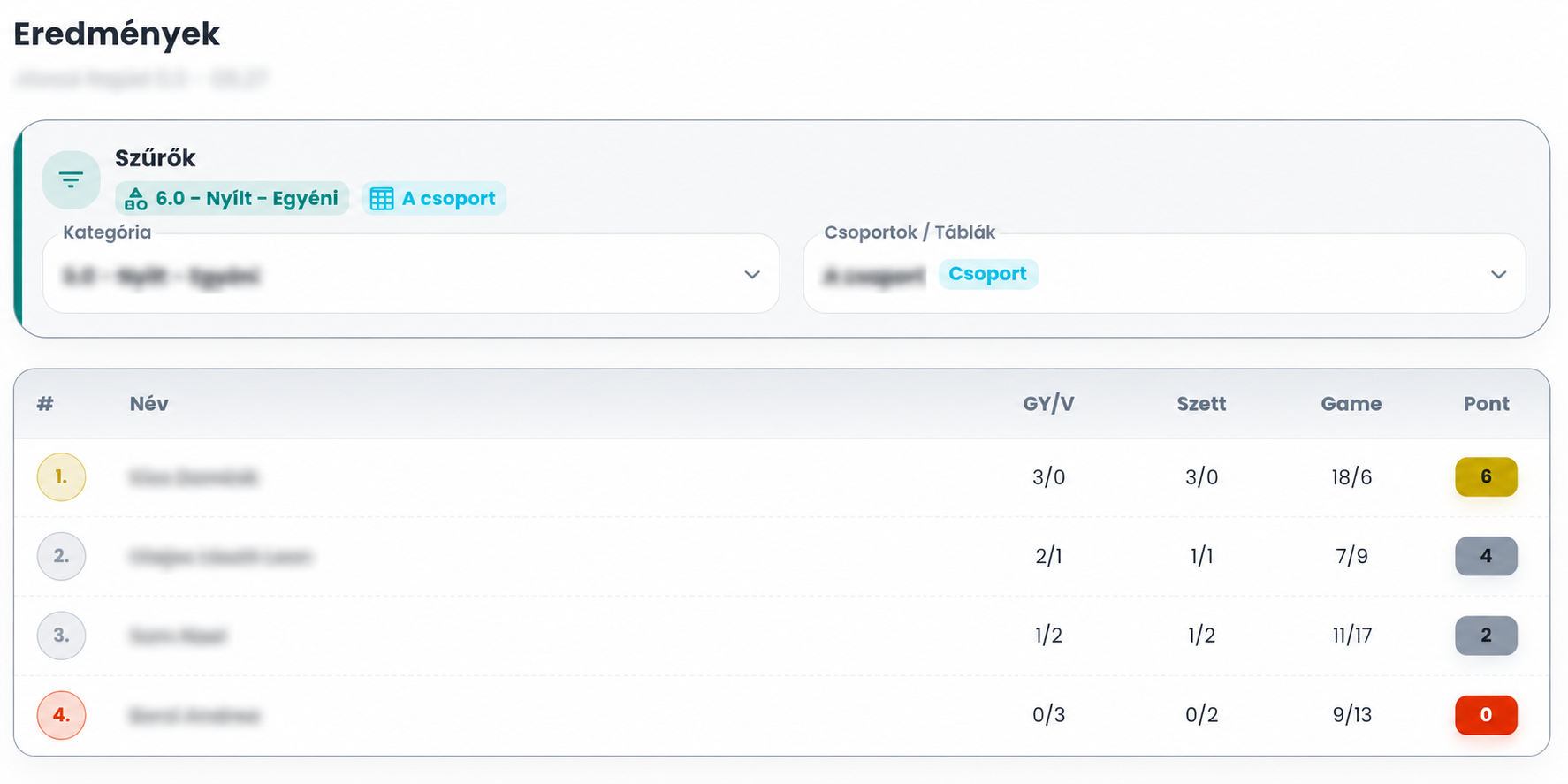
Generate and update points according to configured rules. Ranking points are derived from actual tournament results instead of separate manual calculations.
Participants receive more than a static document: standings, rounds, matches and results can all be followed online.
The principle is simple: the system does more than collect entries. It brings communication, payments, competition management, result entry and the later use of tournament data into one channel.
Configure the basic details, deadlines, sport, categories, capacity and competition rules.
The organiser shares one link and athletes or teams enter in the same place. There is no need to collect data from multiple channels.
Entrants select a category, provide their details and, when required, complete the process with online payment and invoicing.
Turn the field into groups, a knockout bracket, a match list or a ranking-based results structure.
The organiser, team captain or even the player can record results, reducing manual administration in longer leagues.
Use the results to generate and update standings, classifications, tournament summaries or ranking points.
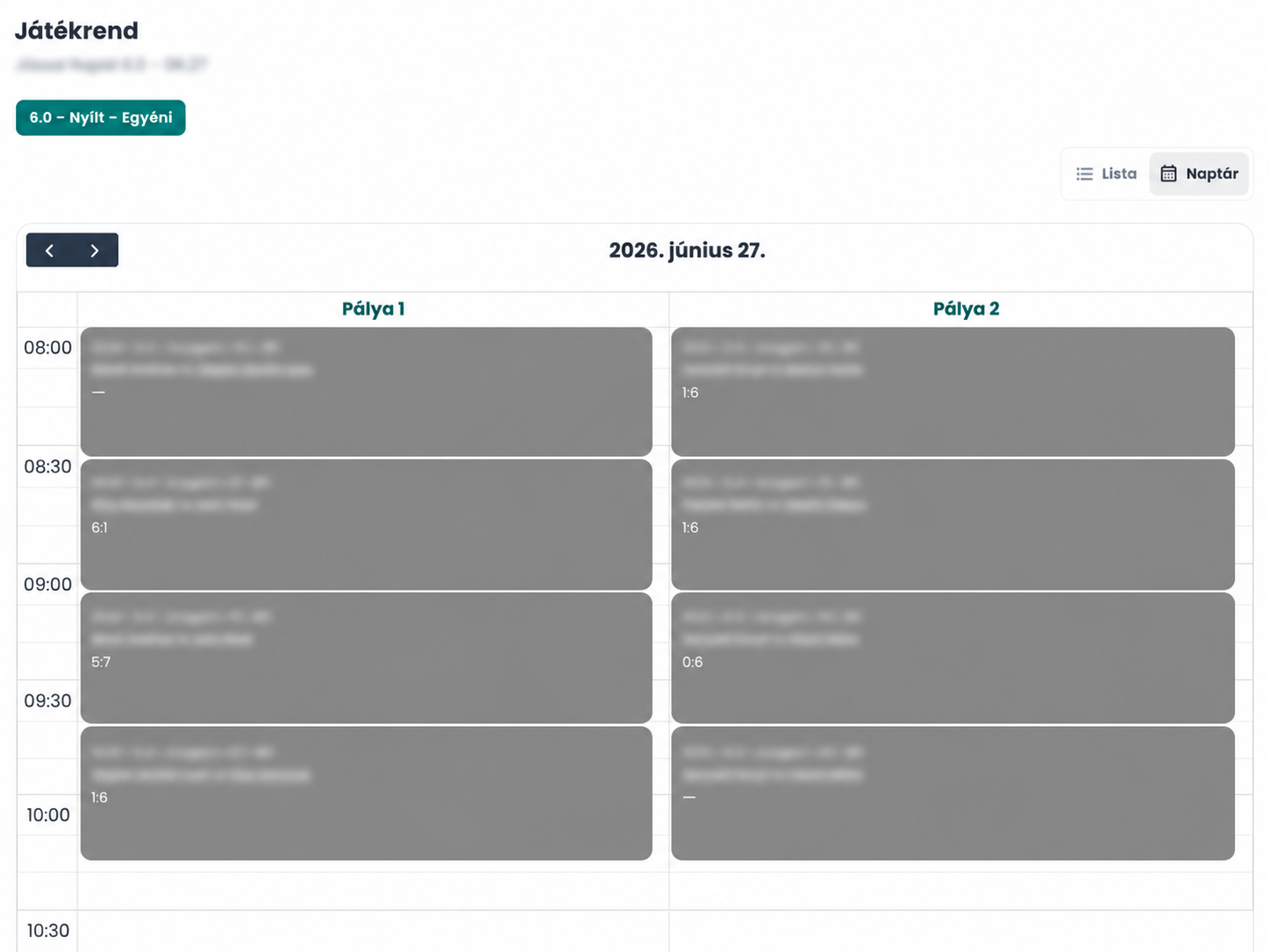
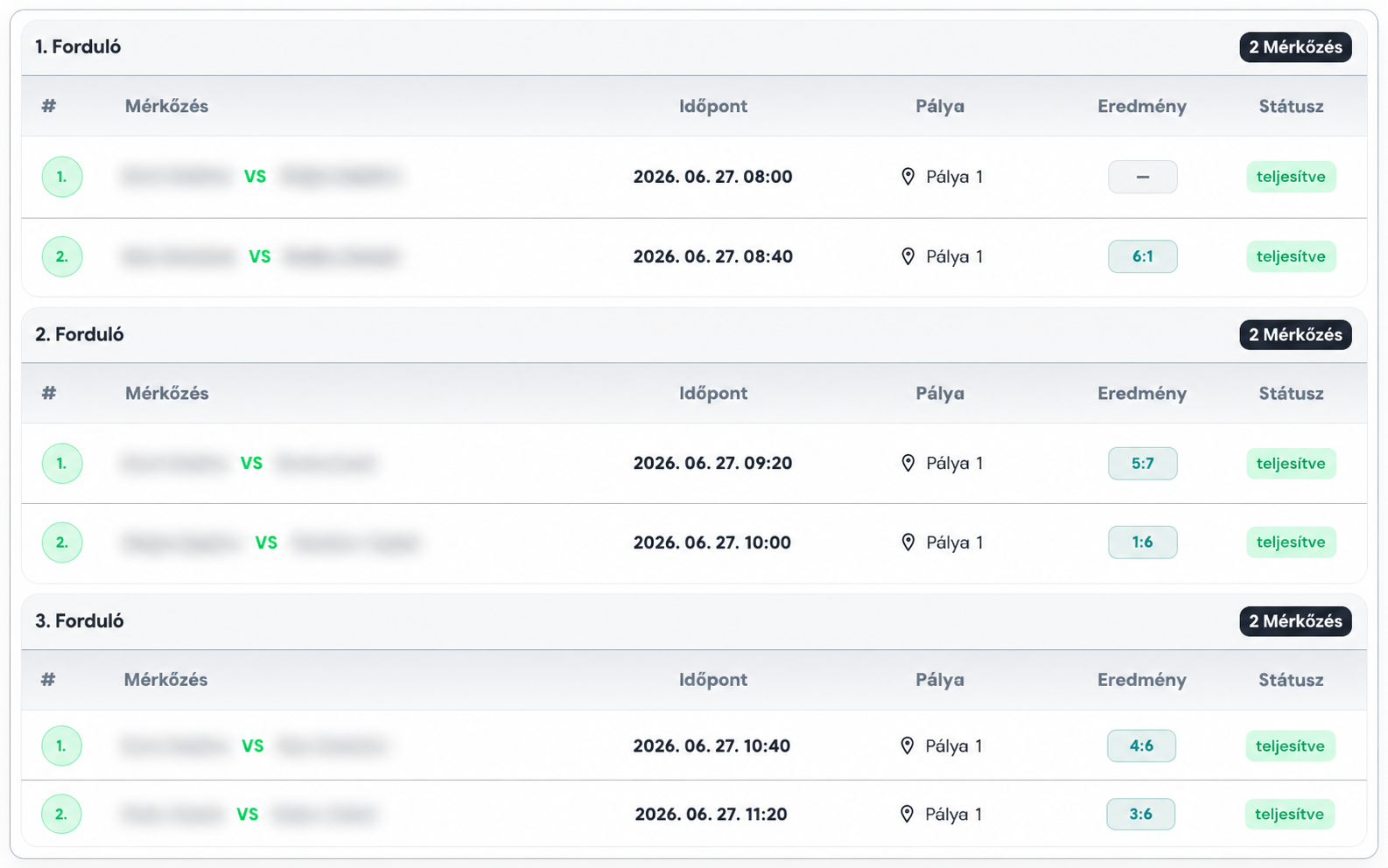
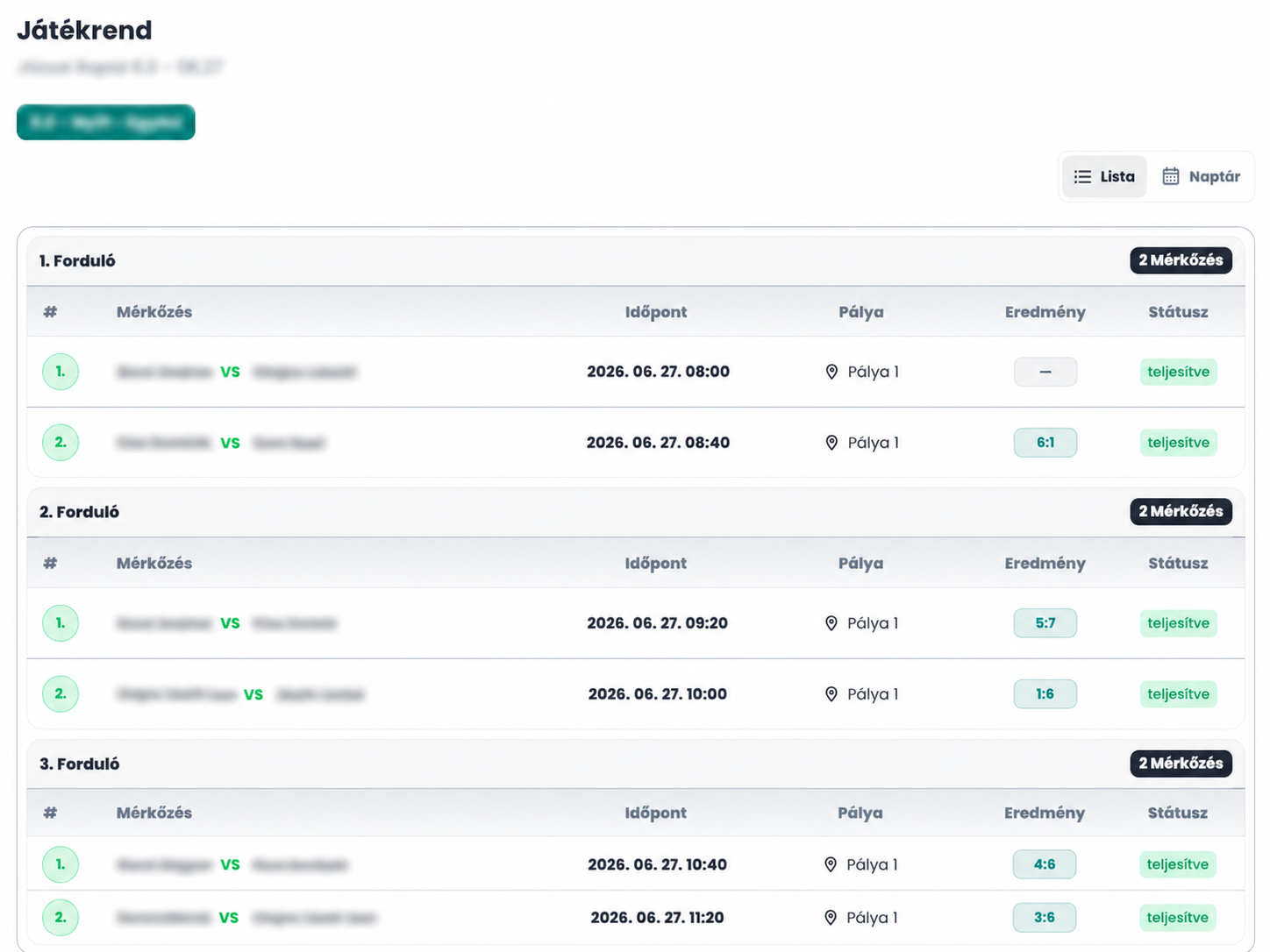
Competitors can use the detailed round list, while the full competition day can also be reviewed by court and time slot.
The system delivers the most value when manual organisation already consumes too much time: many entrants, multiple categories and sports, payments, invoicing, draws, results and rankings all need to be handled together.
For internal tournaments, season-opening or season-closing events with a few participants, where quick entry and simple result management matter most.
Manage up to 500–600 entrants in a single day, across multiple categories, statuses, payments and results lists.
For championships running across rounds, weeks or months, where result entry by captains or players saves administrative time.
For more demanding administration, team championships, ranking points and consistent tournament data management.
The tournament organiser is not another spreadsheet. The key difference is that data stays in the same system throughout: entries become the competition structure, the competition produces results, and the results feed rankings, standings or tournament summaries.
The greatest value is not simply having an online interface. It is keeping entries, communication, payments, competition management, results and follow-up in one process instead of organisational chaos.
There is no need to collect entrants from email, phone calls and Messenger. Participants enter in the same place and provide consistent data.
Categories, statuses, payments, draws and results are connected, reducing duplication and the risk of errors.
When someone withdraws, the entire event does not need to be reorganised. Replacements, substitutions and post-draw changes remain manageable.
The same system supports ranking-based and match-based competitions, from small fields to major competition days.
Results become standings, rankings, points logic and a basis for future communication, rather than a forgotten spreadsheet after the event.
Small club tournament, weekend cup, multi-month league, ranking-based sports event or team championship: manage entries, payments, draws, results and ranking points in one place.